



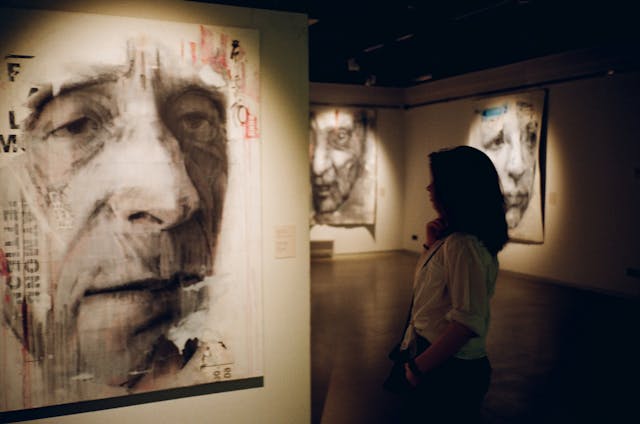
Standing in front of an artwork without knowing who created it can feel unsettling. We’re used to leaning on labels, biographies and auction records to guide our thinking. But there’s something refreshing — even liberating — about encountering a piece without context. It forces you to rely on your own observation, interpretation and emotional response.
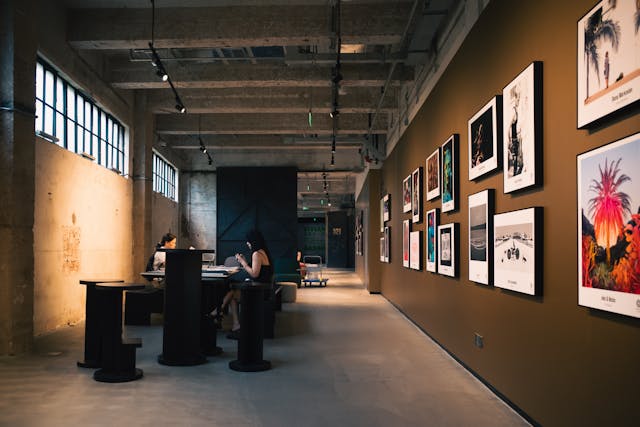
In fact, many contemporary spaces like So High Gallery encourage viewers to engage directly with the work itself before researching the artist’s background.When you remove the name, reputation and backstory, you give yourself permission to look more closely and think more independently.
Here’s how to analyse art confidently — even when you know nothing about the person behind it.
Start with Pure Observation
Before interpreting meaning, simply describe what you see.Ask yourself:
- What colours dominate the piece?
- Are the lines sharp or soft?
- Is the composition busy or minimal?
- Where does your eye travel first?
- What materials appear to have been used?
This stage is about slowing down. Many people glance at art for only a few seconds before forming an opinion. Instead, spend time with it. Notice texture, layering, negative space and small details that might not be obvious at first glance.Observation creates a foundation. Without it, interpretation becomes guesswork.
Consider Composition and Structure
Even without knowing the artist, you can analyse how the work is constructed.Look at:
- Balance — is the piece symmetrical or asymmetrical?
- Movement — does your eye move in a particular direction?
- Focal point — what anchors the composition?
- Contrast — are there strong light and dark elements?
- Scale — does size play a role in impact?
Composition often reveals intention. A chaotic arrangement might evoke tension or unrest, while a balanced structure can create calm or harmony. The arrangement of elements tells a story, even if you don’t yet know what that story is.
Examine Colour and Mood
Colour is one of the most powerful communicators in visual art.Cool tones such as blues and greens can suggest calm, melancholy or introspection. Warm tones — reds, oranges and yellows — may feel energetic, passionate or urgent. Monochromatic palettes often feel controlled or conceptual, while bold colour clashes can create emotional intensity.Instead of asking, “What did the artist mean?” try asking, “How does this colour make me feel?” Your response matters. Art is not a puzzle with a single correct answer — it’s an experience.
Analyse Technique and Medium
Is the work painted in thick impasto layers? Are brushstrokes visible and expressive, or smooth and controlled? Is it digital, mixed media, collage, sculpture or photography?Technique can hint at:
- Emotional urgency (loose, expressive strokes)
- Precision and control (fine detailing)
- Experimentation (unconventional materials)
- Conceptual focus (minimal physical intervention)
Even without biographical context, the technical choices give insight into the work’s energy and intention.
Identify Themes and Symbols
You don’t need the artist’s statement to recognise recurring imagery or symbolic elements.Look for:
- Repeated motifs
- Cultural or natural references
- Figures and body language
- Objects placed prominently
- Patterns or abstraction
If you see a fragmented figure, you might consider themes of identity or disconnection. If nature dominates the canvas, perhaps the work explores environment, growth or impermanence. The key is not to “solve” the artwork, but to explore possibilities.
Pay Attention to Your Emotional Response
One of the most overlooked tools in analysing art is your own reaction.Do you feel unsettled? Calm? Curious? Inspired? Confused?Your emotional response is valid data. Contemporary art especially often prioritises reaction over representation. When you encounter a piece without knowing the artist, you’re free from preconceptions. There’s no pressure to admire it because of fame, or to criticise it because of controversy.Instead, you experience it on its own terms.
Consider Cultural and Historical Clues (Without Googling)
Even without knowing the artist, you can observe contextual hints:
- Does the fashion or architecture suggest a time period?
- Are there references to modern technology?
- Does the style resemble impressionism, surrealism, street art or abstraction?
These observations can help you situate the work loosely in a broader visual tradition.However, avoid rushing to label it. Style is fluid, and many contemporary artists deliberately blur boundaries.
Ask Better Questions
Instead of asking, “Is this good?” try asking:
- What is this work trying to communicate?
- How does it make me think differently?
- Why might someone create this?
- What stands out the most, and why?
Quality in art isn’t always about realism or technical perfection. Sometimes it’s about impact, originality or conceptual depth.
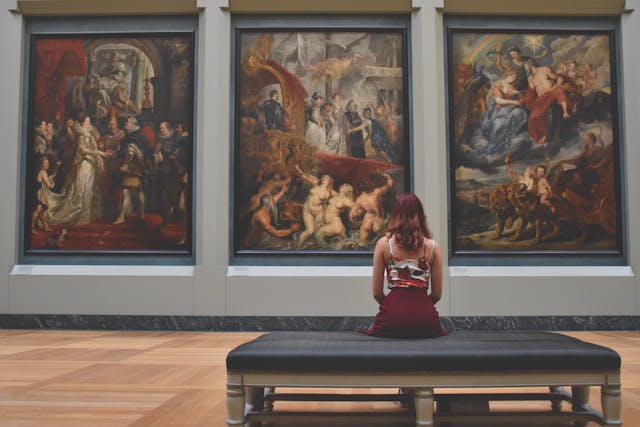
Embrace Uncertainty
Not knowing the artist can feel uncomfortable because we’re conditioned to value authority. If a famous name is attached, we assume importance. But art doesn’t lose meaning simply because we don’t recognise the signature.In fact, analysing art without knowing the creator can sharpen your critical thinking skills. It pushes you to:
- Trust your instincts
- Develop visual literacy
- Form independent opinions
- Engage more deeply
The experience becomes less about reputation and more about relationship — the one between you and the artwork.
When Context Eventually Matters
After you’ve spent time forming your own impressions, researching the artist can be enlightening. You may discover personal history, political influences or cultural frameworks that shift your understanding entirely.But by analysing the work first — independently — you create a stronger foundation for that knowledge. Instead of being told what to think, you enter the conversation prepared.
You don’t need an art degree or a catalogue essay to analyse art thoughtfully
You simply need time, attention and curiosity.Next time you encounter an artwork without a familiar name attached, resist the urge to search immediately. Stand with it. Observe. Reflect. Question.Art is not reserved for experts. It’s a dialogue — and you are already part of it.