




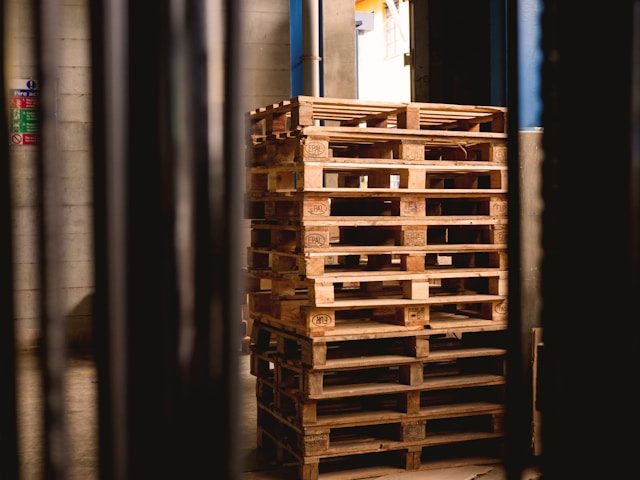
Pallets in Australia′s rolling logistics and warehousing business continently act as a medium of transferring goods to suppliers, retailers, and finally to customers in a very efficient and smooth way. Although it might seem that the pallets are just simple and nothing more than wooden pieces, the type of pallet can make a huge difference in the transport costs, handling of the goods and the ability to meet the international shipping requirements. When the two types of pallets Euro pallets and standard pallets are put on a scale, each type is designed for different supply chain demands and thus the comparison is very common in the industry. The knowledge about the differences that exist between these two pallet types is very crucial for the companies that want to use their storage space effectively and at the same time experiencing smooth cross-border movements. Euro pallets have established themselves as common in many global trade routes and especially for goods passing between the different European regions. Not to mention, they are becoming more relevant and common for Australian companies that import or export their products to the European markets. On the contrary, standard pallets are the ones that rule the Australian market since the local racking systems, transport equipment and warehouse workflows are all compatible with them.
Dimensions and Design Considerations
The difference in size is one of the major factors that separates Euro pallets from standard pallets. The standard pallet in Australia has a dimension of 1165 mm by 1165 mm, which was adapted to the internal width of rail containers used in Australia. This square shape contributes to the rail freight being packed more efficiently, which was essential for the country’s logistics systems in the past. Euro pallets, however, are based on the European sizing of 1200 mm by 800 mm. Their long rectangular shape is specifically designed so that they fit into the European trucks and containers very well, thus allowing more packing and no waste of space at all. These different sizes can be regarded as minor, but in fact, they directly impact the storage tally, shipping capability, or transport vehicle used in Australia. In some cases, pallets made of different materials may be distinguished based on the final application. Pallets in Australia are oftentimes made from either hardwood or softwood and are designed to take very heavy loads of around the domestic industries such as agriculture, construction or food distribution.
Regulatory Standards and International Trade
Regulations have a major impact on deciding which pallets can be used for international shipments. Euro pallets belong to a well-regulated system where an officially licensed manufacturer puts a stamp on each pallet certifying that it complies with the European Pallet Association’s standards. This certification ensures that European trade can rely on uniform quality and performance. Not complying with these rules can lead to border delays, penalties or rejections in cases involving the European Union. For Australian exporters to Europe, the right pallet type could lessen compliance-related problems and make freight handling easier at the destination. Regular Australian pallets are not subjected to the same certification process. Their acceptability, rather, is based on the application of general industry practices and adherence to global phytosanitary regulations, with ISPM 15 being the most significant. This standard prescribes pest-resistant treatment to assure no pest will accompany the exported material. While both types of pallets need this treatment for their international shipments, Euro pallets’ stricter manufacturing controls are their ticket to the regulated markets as they often give the pallets an edge over others.
Handling, Transport and Warehouse Efficiency
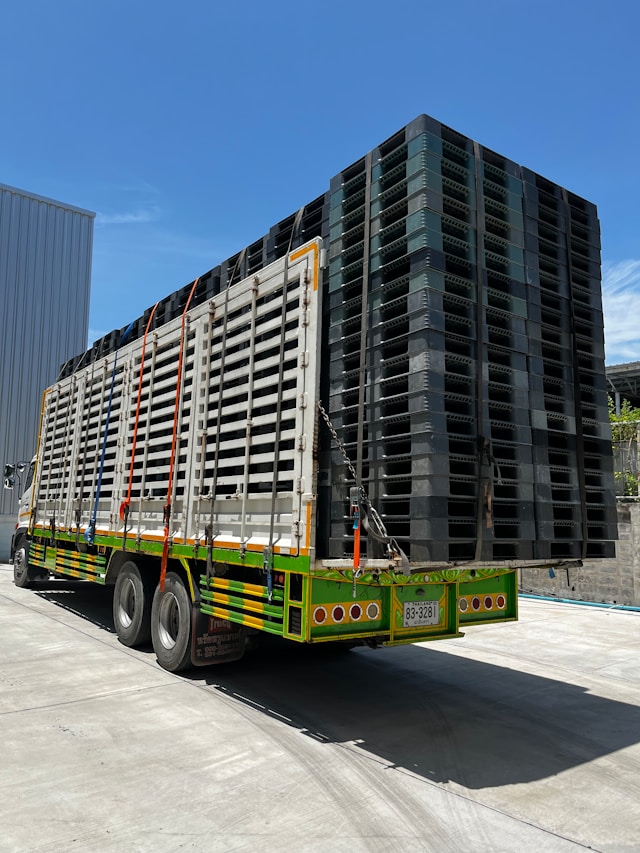
In Australia, warehouse operators typically use equipment that is based on the local pallet size. The 1165 mm format has become the standard for forklifts, pallet jacks, and conveyor systems making standard pallets easier to use with everyday handling equipment. When a Euro pallet is used in a domestic Australian warehouse, sometimes the workflow is slowed down or the labour cost is increased due to the need for adjustments or specialised equipment. This mismatching of sizes is most evident in automated systems where exact sizing is a prerequisite for smooth functioning. Pallet selection is also a factor that influences transport efficiency. Australian trucks and containers are built up to the standard pallet footprint, which in turn, allows operators to be at their highest load density.

Cost, Reuse and Environmental Considerations
In Australia, pallet selections are also impacted by the cost aspect. Standard pallets have a large supply and are often cheaper due to being produced locally and being extensively reused within the local supply chain. Their sturdiness also means that they last longer in the Australian climate and conditions. Euro pallets, on the other hand, require certification which is very expensive and they meet the highest and the most expensive international standards of production which is another reason why they are priced on the higher side. For companies with an Australian market focus, this extra cost may not always be reasonable. Environmental factors are also something that should be taken into consideration. A smart selection of pallets could lead to an emissions-free transport system and this could be achieved through maximising load density and minimising unnecessary trips.