



Sending a job sheet to a laser cutting workshop with all the right details is a recipe for disaster; parts that don’t even fit together, a workshop that can’t get started on the work and a lead time that just keeps stretching out while the file goes back for rework. And it all starts before they even get to slapping the material onto the cutting bed; getting the job right needs to happen long before then.
Why Material Selection Is Not Straightforward?
The fact is not all materials react the same way to a laser beam, and that shows up big in the quality of the cut and the accuracy of the parts. The gap between the right material and the wrong one is there for all to see in the cut edge and the dimensional accuracy. For example take mild steel, the most common material to be cut by fibre lasers here in Melbourne workshops; it handles big thick plates with ease. But then there’s stainless steel that does all right with laser cutting but to avoid that annoying edge discolouration that can come with it, you need to manage the assist gas with care. Aluminium on the other hand, reflects laser energy like nobody’s business which means you need higher-powered machines to cut it cleanly, that’s if you can get it clean at all. And then there’s acrylic that produces those lovely flame-polished edges from a CO2 laser making it a pretty practical choice for display components and signage, that’s if you’re working in the right environment. For projects where precision and material compatibility both matter, working with established Melbourne laser cutting services makes a real difference to the outcome.
According to the Australian Bureau of Statistics, as of June 2024 there are around 902,000 people working in the manufacturing sector across 90,476 businesses. And laser cutting is right smack in the middle of that precision fabrication sector, supplying all sorts of industries from shopfitting and automotive to advertising and engineering all over Melbourne and the rest of the country.
Cutting Width, Kerf, and Why Both Belong in Your Drawing
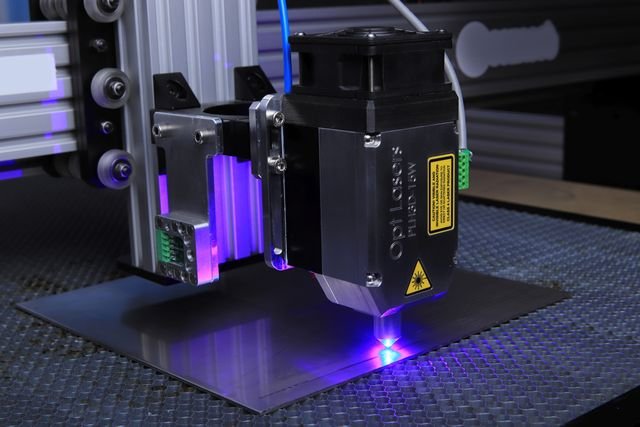
The width of cut of a laser beam, which is the width of material it chops off as it cuts, tends to be around 0.20mm for most modern fibre laser systems. That’s a pretty narrow cutting width; it’s what lets them produce parts with tight geometric tolerances consistently across a sheet. In practical terms that means you really need to factor in material removal when designing any features that are going to get mated with another part, a notch, a slot, a tab, or else the parts aren’t going to fit together right when they come back from the shop. And that’s not something the shop can sort out after the cutting is done; you have to figure it out in the original drawing file before you even start the job.
Laser Cutting as the First Step in a Larger Process
Laser-cut parts don’t usually end up as the finished product. For most fabrication projects, it’s just the starting point for a process chain that ultimately determines what the final product is going to look like. After cutting, for any component that needs bending, you might need to do some brake pressing (that’s what they commonly call folding). Then you have to deburr and finish the edges, which is particularly important if the part is going to get handled a lot or is visible in the final assembly. And of course there are downstream operations like welding, countersinking, and tapping that tend to follow the cut. Then you may want to bring it all together with some surface finishing, like powder coating, zinc plating, or electroplating, to get it looking like you want. Shops that can do the whole thing in-house generally end up with more consistent results because they know what’s coming next at each step.
What to Have Ready Before Sending a Job to a Melbourne Workshop?
Most delays in commercial laser cutting come from getting the files ready. The standard formats that laser cutting software reads are DXF and DWG; PDF files are pretty much only used for quoting and checking the design, not for the actual cutting. Before you even start quoting, you really need to make sure you know what material you’ve got, its thickness, and how much of it you need. And before you can even think about applying kerf allowances to your design, which basically means factoring in the width of cut when designing features that need to fit together, you need to make sure that’s already factored in. If a component will get powder coated, you should let the workshop know exactly which holes or edges need to be masked before that happens. And it’s a good idea to have a chat with them about lead time, especially if your project involves a whole bunch of downstream processes beyond just the cut itself.